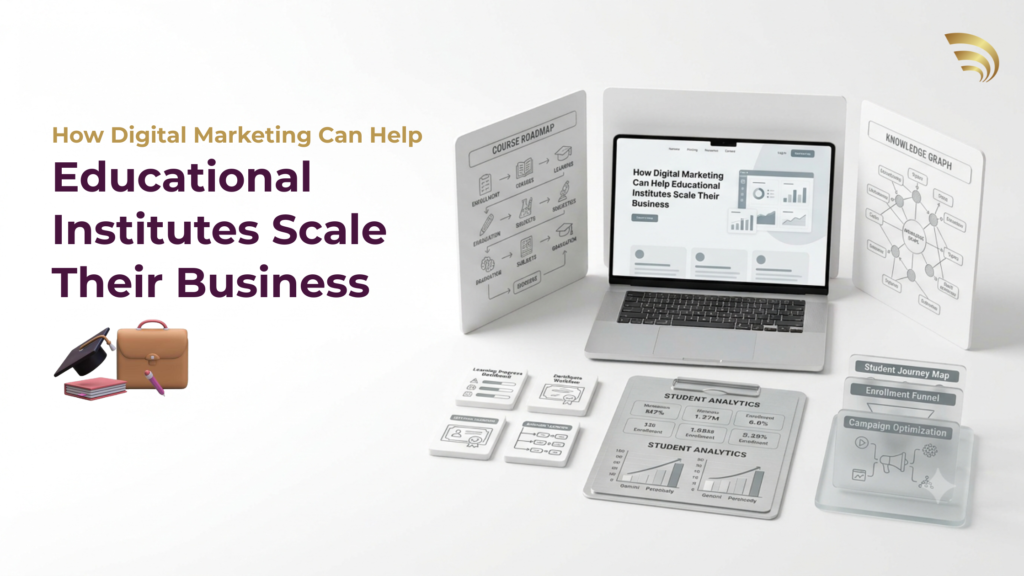
In today’s competitive education landscape, Digital Marketing for Educational Institutions has become essential for universities, colleges, schools, and EdTech brands to attract prospective students, boost online visibility, and increase admissions.
Every institution has different admission goals, audiences, and challenges. A clear strategy brings these moving parts together, from improving search visibility to reaching prospective students through paid campaigns and social media. Explore our digital marketing services for educational institutions to see how these activities can work together.
Key Takeaways
- Digital marketing for educational institutions is essential to increase online visibility, attract qualified student inquiries, and improve admissions.
- A strong digital presence starts with SEO and a user-friendly website, making it easier for prospective students to discover your institution and take action.
- Authentic content and student success stories build trust, helping parents and students make informed admission decisions with confidence.
- Social media creates meaningful engagement by showcasing campus life, academic achievements, and real student experiences while strengthening your brand.
- Year-round marketing campaigns keep your institution top of mind, ensuring consistent engagement beyond the admission season.
- An integrated strategy combining SEO, content marketing, social media, email marketing, and analytics delivers the best long-term results for student recruitment and brand growth.
How to Generate Student Leads Through Digital Marketing
Getting more people to visit your website is a good start, but it doesn’t automatically translate into more admissions. What matters is whether prospective students find the information they need and feel confident enough to take the next step.
Start by looking at your website from a student’s point of view. If someone is exploring a course, can they easily find details about eligibility, fees, career opportunities, faculty, and the admission process? If this information is difficult to find, even a well-targeted marketing campaign can lose potential enquiries.
Here are a few practical ways to turn website visitors into student leads:
-
Create useful course and admission pages: Give prospective students the information they need to compare programmes and understand what makes your institution a good fit.
-
Make enquiries easy: Add clear options to request a brochure, speak with an admissions counsellor, book a campus visit, or submit an enquiry.
-
Show what makes your institution different: Share student experiences, faculty expertise, campus facilities, industry partnerships, and verified placement information where available.
-
Reach students at different stages: Use SEO to attract people actively researching courses, paid campaigns to reach relevant audiences, and social media to showcase campus life and student experiences.
-
Follow up promptly: An enquiry is only the beginning. A timely, helpful response can make it easier for a prospective student to get answers and move forward with an application.
The aim isn’t simply to collect more leads. It’s to attract students who are genuinely interested in your programmes and give them a clear path from their first visit to an admission enquiry.
Understanding the Impact of Digital Marketing for Educational Institutions
Digital marketing has revolutionized how educational institutes reach and engage with their audience. By utilizing digital channels, institutes can enhance their visibility, attract prospective students, and build a strong online presence. Digital marketing allows for targeted campaigns, ensuring that the right message reaches the right audience at the right time. This level of precision is crucial in a competitive educational landscape where attracting and retaining students is paramount.
Key Digital Marketing Strategies Educational Institutes Should Implement
Effective education marketing strategies help institutions attract students, strengthen their reputation, and improve admission conversions.
Prospective students are looking for specific information that can influence their decision-making process. Educational institutes should highlight the following key factors on their digital media:
- Academic Excellence: Showcase the institute’s achievements, faculty credentials, and student success stories.
- Campus Life: Provide insights into campus activities, facilities, and student organizations.
- Career Opportunities: Highlight internship programs, industry partnerships, and job placement rates.
- Student Support Services: Inform about counseling, academic support, and extracurricular activities.
- Testimonials and Reviews: Share positive feedback from current students and alumni to build trust and credibility.
How Educational Institutes Can Build a Strong Digital Brand Presence
A strong digital presence is a key component of successful digital marketing strategies for educational institutes. An engaging brand presence is vital for capturing the attention of prospective students and standing out in a competitive market. Key strategies include:
- Capture high-intent searches: Create useful, optimized pages for courses, eligibility, fees, admissions, and location-specific searches.
- Convert visitors into enquiries: Add clear admission CTAs, enquiry forms, campus visit booking options, and course brochures.
- Build trust: Showcase verified placement data, faculty profiles, student experiences, accreditations, and campus facilities.
- Generate demand: Use relevant search ads, social campaigns, webinars, and open-day promotions to reach prospective students and parents.
- Nurture prospective students: Follow up with consent-based email or messaging campaigns, relevant course information, and application reminders.
- Measure actual admissions: Track qualified leads, applications, enrolments, cost per admission, and campaign performance—not just clicks.
Social Media Marketing Strategies for Universities and Colleges
Social media marketing for universities helps institutions create communities, engage students, and improve brand awareness. Social media is a powerful tool for building community and engaging with students, alumni, and faculty. Effective use includes:
- Regular Posts: Share educational resources, event updates, and success stories to keep your audience engaged. Regular updates help maintain a connection with your audience and keep your institute top of mind.
- User-Generated Content: Encourage students and alumni to share their experiences. This not only provides authentic content but also fosters a sense of community and belonging.
- Live Sessions and Webinars: Host interactive sessions to address queries and provide valuable information. These live interactions can help build trust and establish your institute as a reliable source of information.
- Influencer Collaborations: Partner with influencers to increase brand awareness. Influencers with a strong following can help you reach a broader audience and enhance your credibility.
Year-Round Admission Marketing Strategies for Educational Institutes
Admission marketing strategies help institutions maintain consistent student engagement throughout the academic year. Seasonal marketing campaigns keep your audience engaged and help maintain top-of-mind awareness. Key strategies include:
- Planning Around Key Events: Align campaigns with admissions, orientation, and graduation. Planning your marketing efforts around these events ensures that your campaigns are timely and relevant.
- Seasonal Themes: Use festive content and special promotions to capture attention. Seasonal themes can make your content more engaging and memorable.
- Collaborations: Partner with student clubs for engaging events and activities. Collaborations can help you reach a wider audience and create a sense of community.
- Email Marketing: Stay connected with personalized updates and reminders. Regular email updates keep your audience informed and engaged.
- Analytics: Evaluate campaign performance to optimize future strategies. Monitoring your campaign performance helps you understand what works and what doesn’t, allowing you to improve your strategies.
Croccle plans and executes year-round seasonal campaigns, ensuring continuous engagement and high ROI. Connect with us to optimize your seasonal marketing strategy.
Digital Marketing Strategies to Increase College Admissions
Admission decisions rarely happen after a single website visit. Students may compare several colleges, discuss options with their parents, check placement records, and revisit course details before deciding where to apply. Your marketing should support that journey rather than rely on a single campaign during admission season.
Build visibility before admissions open. Publish useful content about courses, career paths, eligibility, entrance exams, and campus facilities. This helps prospective students discover your institution while they are still exploring their options.
Use search and paid campaigns with a clear purpose. SEO can help your institution appear in relevant organic searches, while paid search campaigns can reach people looking for specific courses or admission opportunities. Direct each campaign to a relevant page instead of sending every visitor to the homepage.
Show students what life at your institution is really like. Campus videos, student projects, faculty introductions, alumni experiences, and event coverage can give prospective applicants a better feel for the institution. Keep these stories authentic and use genuine experiences rather than generic promotional claims.
Make it easy to take the next step. Depending on the campaign, that might mean downloading a prospectus, registering for an open day, attending a webinar, or speaking with the admissions team. Make the next action clear and straightforward.
Keep the conversation going. Students who enquire today may not be ready to apply immediately. With appropriate consent, share relevant updates, important dates, course information, and application reminders.
A well-planned admission marketing strategy connects these activities. Instead of judging success by reach or clicks alone, look at how many relevant enquiries progress to applications and, eventually, enrolments.
SEO Strategies for Educational Institutes to Improve Search Visibility
SEO for educational institutes helps universities and schools rank for student-focused searches and generate organic inquiries. A well-optimized website improves visibility and user experience, attracting more prospective students. Key strategies include:
- Keyword Research: Identify and use relevant keywords to improve search engine ranking. This ensures that your website appears in search results when prospective students are looking for educational opportunities.
- Clear Navigation: Organize content into logical categories for easy navigation. A well-structured website helps visitors find the information they need quickly and easily.
- Loading Speed: Optimize images and files for faster website loading. A fast-loading website reduces bounce rates and improves user experience.
- Mobile-Friendly Design: Ensure a seamless browsing experience on all devices. With the increasing use of mobile devices, a mobile-friendly website is essential.
- Valuable Content: Regularly update informative content like blogs and FAQs. Fresh content keeps your audience engaged and helps improve your search engine ranking.
- Call to Action: Guide visitors to take desired actions, such as filling out forms or applying. A clear and compelling call to action can significantly improve conversion rates.
Croccle’s SEO and web development teams optimize your site for better visibility and user experience. Get in touch for a consultation and improve your online presence.
How to Measure Digital Marketing ROI for Educational Institutions
Digital marketing reports can look encouraging when website traffic and social media engagement are increasing. But for an educational institution, the more important question is whether those activities are helping attract prospective students and generate admissions.
Start by agreeing on what success looks like with your marketing and admissions teams. Then track a few metrics that connect marketing activity to actual outcomes.
-
Qualified enquiries: How many enquiries come from students who match your programmes, eligibility requirements, and target audience?
-
Cost per lead: How much are you spending to generate each enquiry through a particular campaign?
-
Application rate: What proportion of enquiries go on to submit an application?
-
Admission conversion rate: How many applicants ultimately enrol?
-
Cost per admission: How much marketing spend is associated with each new admission?
-
Channel performance: Which sources—organic search, paid search, social media, referrals, or other campaigns—are bringing in relevant prospects?
For example, a campaign generating a high volume of enquiries may appear successful at first. However, if very few of those enquiries turn into applications, the institution may need to review its targeting, landing page, programme messaging, or follow-up process.
Make sure your website analytics, advertising platforms, enquiry forms, and admissions records are connected wherever possible. This helps your team understand which campaigns are contributing to results instead of relying on clicks and impressions alone.
The goal is to make better marketing decisions over time: invest more confidently in what works, identify gaps in the admission journey, and reduce spend on activities that aren’t delivering the right outcomes.
SEO, paid advertising, content, and social media each play a different role in attracting prospective students. When these activities are planned together, institutions can build visibility, generate relevant enquiries, and make more informed decisions about their marketing spend. Learn more about our digital marketing services in India.
Content Marketing Strategies for Education Brands
Content marketing allows institutions to educate prospective students and build trust before admission decisions. Content marketing establishes your institute as a thought leader and builds trust with your audience. Effective strategies include:
- Content Strategy: Develop content that addresses the interests and pain points of your audience. A well-planned content strategy ensures that your content is relevant and valuable to your audience.
- High-Quality Content: Create informative blogs, ebooks, videos, and infographics. High-quality content attracts and engages your audience, helping to build a loyal following.
- Promotion: Share content through your website, social media, and email newsletters. Promoting your content ensures that it reaches a wider audience and generates more engagement.
- Analytics: Track performance metrics to optimize your content strategy. Analytics provide insights into what is working and what needs improvement, allowing you to make data-driven decisions.
Digital Marketing for Schools, Colleges, and Universities
Not every educational institution needs the same digital marketing strategy. A school, an undergraduate college, a university, and a postgraduate management institute may all want to increase enquiries, but their audiences and decision-making processes can be very different.
For schools, parents are often a key audience. Information about curriculum, teaching approach, safety, facilities, extracurricular activities, and the admission process can help families decide whether to enquire or arrange a visit.
For colleges, prospective students may focus on courses, fees, faculty, campus life, internships, placements, and career opportunities. Search visibility, programme-specific landing pages, student stories, and well-targeted admission campaigns can help answer these questions.
For universities, marketing may need to cover a wider range of programmes, research, faculty expertise, campus facilities, and opportunities for domestic or international students. Clear navigation and content tailored to different audiences become especially important.
For postgraduate and specialist institutions, prospective students may place greater emphasis on specialisations, industry exposure, professional outcomes, alumni networks, and return on investment.
The best approach starts with understanding what your audience needs to know before making a decision. From there, SEO, content marketing, paid campaigns, and social media can work together to answer those questions and guide prospective students towards the next step.
Croccle develops tailored content strategies and tracks performance with advanced analytics to maximize impact. Contact us to refine your content marketing efforts.
In conclusion, the power of integrated digital marketing strategies in the education sector cannot be overstated. By effectively utilizing digital channels, educational institutes can elevate their visibility, attract a diverse pool of students, and stand out in a competitive landscape. Croccle’s expertise in implementing such strategies can provide invaluable support in developing a unique value proposition, creating engaging brand presence across digital platforms, leveraging social media for community building, and optimizing websites for search engines and user experience. So, leap into the digital realm and watch your institute thrive in the digital age.
Frequently Asked Questions
Why is digital marketing important for educational institutes?
Digital marketing helps educational institutes increase online visibility, attract prospective students, generate qualified inquiries, and improve admission conversions through targeted campaigns.
What are the best digital marketing strategies for universities?
The most effective strategies include SEO, content marketing, social media marketing, paid advertising, email marketing, website optimization, and analytics-driven campaigns.
How can schools increase student admissions through digital marketing?
Schools can increase admissions by improving search visibility, showcasing achievements online, running targeted campaigns, sharing student testimonials, and creating engaging digital experiences.
Why should educational institutions invest in SEO?
SEO helps educational institutions appear when students search for courses, colleges, universities, and educational programs online, generating long-term organic traffic.
How does social media help educational institutions?
Social media helps institutions build communities, showcase campus life, engage students, and strengthen trust among prospective applicants and parents.